

Get Answers Faster with Diagnostic Ultrasound
At Newington Spine & Joint, diagnostic musculoskeletal ultrasound helps us evaluate muscles, tendons, ligaments, joints, and nerves in real time so we can identify the source of your pain and create a targeted treatment plan designed around your goals.
What Is Diagnostic Ultrasound?
Diagnostic musculoskeletal ultrasound is a safe, non-invasive imaging tool used to evaluate soft tissue structures throughout the body, including muscles, tendons, ligaments, joints, and nerves.
Unlike traditional imaging that provides a static picture, ultrasound allows your provider to assess tissues in real time while you move. This dynamic evaluation can provide valuable information about how structures function during activity and help identify the source of pain or movement limitations.
At Newington Spine & Joint, diagnostic ultrasound is used as part of a comprehensive evaluation process. The information gathered through imaging helps us develop a more accurate diagnosis and a personalized treatment plan tailored to your specific condition, goals, and lifestyle.
Why Patients Choose Newington Spine & Joint
At Newington Spine & Joint, we believe successful treatment begins with an accurate diagnosis.
Our comprehensive evaluations combine clinical expertise, movement assessment, and advanced diagnostic tools to identify the underlying cause of pain and dysfunction. Diagnostic ultrasound allows us to visualize soft tissue structures directly, helping us make more informed treatment decisions and monitor progress over time.
Whether you’re dealing with a new injury, persistent pain, or recurring symptoms, our evidence-based approach is designed to help you understand what is happening, why it is happening, and how we can help you recover.
Benefits of Diagnostic Ultrasound
- Non-invasive imaging with no radiation exposure
- Real-time visualization of muscles, tendons, ligaments, and joints
- Dynamic assessment during movement
- Immediate clinical feedback during your appointment
- Helps identify the source of pain and dysfunction
- Assists in developing personalized treatment plans
- Can monitor healing and rehabilitation progress
- Comfortable and cost-effective imaging option
- Supports evidence-based decision making
- Provides valuable information alongside physical examination findings
Conditions That May Benefit from Diagnostic Ultrasound Evaluation
Diagnostic ultrasound can help evaluate a variety of musculoskeletal conditions, including:
- Shoulder pain
- Rotator cuff injuries
- Tendinopathy and tendon tears
- Elbow pain
- Tennis elbow
- Golfer’s elbow
- Wrist and hand injuries
- Hip pain
- Gluteal tendinopathy
- Knee pain
- Calf strains
- Achilles tendinopathy
- Plantar fasciitis
- Muscle strains and tears
- Ligament injuries
- Joint swelling
- Bursitis
- Nerve entrapments
- Sports-related injuries
How Does Diagnostic Ultrasound Work?
Diagnostic ultrasound uses high-frequency sound waves to create detailed images of soft tissue structures beneath the skin.
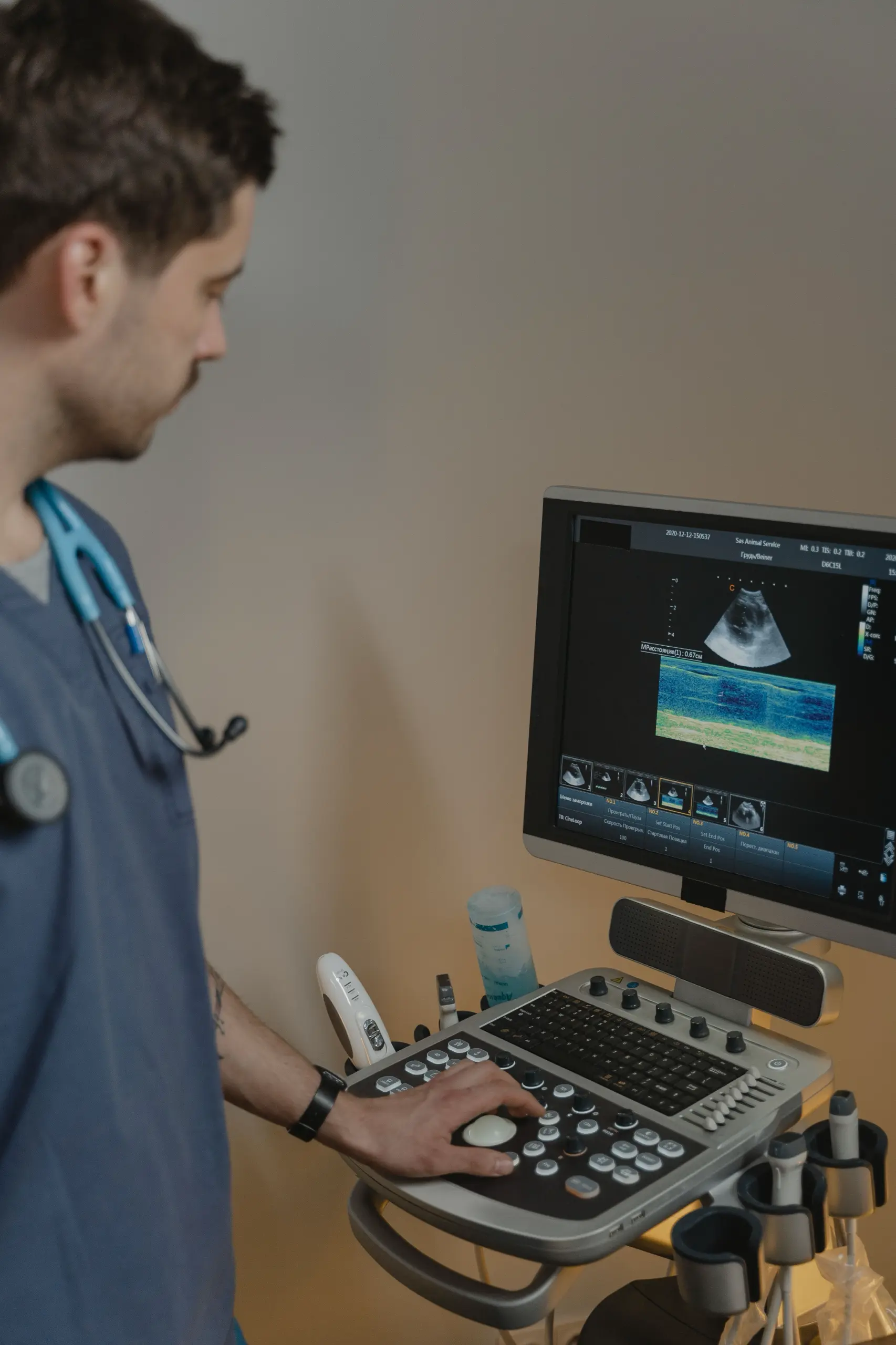
During the examination, a handheld ultrasound probe is placed over the area of concern. The probe sends sound waves into the body and receives echoes that are converted into real-time images on the screen.
Because imaging occurs live, your provider may ask you to move the affected body part during the examination. This dynamic assessment helps evaluate how muscles, tendons, and joints function during movement and may reveal findings that are not visible with static imaging alone.
The results are reviewed alongside your medical history, symptoms, and physical examination findings to guide treatment recommendations.


What to Expect
Your First Visit
Your appointment begins with a thorough examination and discussion of your symptoms, medical history, and goals.
If diagnostic ultrasound is appropriate, the area being evaluated will be scanned using a handheld ultrasound probe and a small amount of ultrasound gel. The examination is painless, does not involve radiation, and typically takes only a short time to complete.
Because images are available immediately, your provider can discuss findings with you during the visit and explain how they relate to your symptoms and treatment options.
Following the evaluation, you will receive individualized recommendations designed to help you move better, reduce pain, and return to your normal activities as safely and efficiently as possible.
Is Diagnostic Ultrasound Safe
Safe, Modern Imaging
Diagnostic ultrasound is widely recognized as a safe imaging technology and does not expose patients to ionizing radiation.
The procedure is non-invasive, comfortable, and suitable for evaluating many common musculoskeletal conditions. Because imaging can be performed during a clinical visit, ultrasound often provides valuable information without the delays associated with other imaging studies.
At Newington Spine & Joint, patient safety, education, and evidence-based care remain our highest priorities throughout the evaluation process.
FREQUENTLY ASKED QUESTIONS
No. Diagnostic ultrasound is generally painless. The examination involves moving a handheld probe over the skin with ultrasound gel.
No. Ultrasound uses sound waves to create images and does not expose patients to radiation.
Musculoskeletal ultrasound is commonly used to evaluate muscles, tendons, ligaments, joints, and peripheral nerves throughout the body.
In many cases, findings can be reviewed and discussed during your appointment, allowing for faster clinical decision-making.
Ultrasound and MRI provide different types of information. Depending on the condition being evaluated, ultrasound may provide valuable diagnostic information on its own or may be used alongside other imaging studies when appropriate.
Absolutely. Diagnostic ultrasound can help confirm clinical findings, identify injured structures, monitor healing, and assist in developing an individualized treatment plan.
Our Approach
Finding the Cause, Not Just Treating the Symptoms
At Newington Spine & Joint, we believe patients deserve more than temporary symptom relief.
Diagnostic ultrasound helps us better understand what is contributing to your pain and movement limitations so we can create targeted treatment strategies that address the root cause of the problem.
Combined with physical therapy, chiropractic care, movement analysis, therapeutic exercise, and patient education, diagnostic ultrasound serves as another tool that helps us deliver personalized, evidence-based care focused on long-term results.
Our goal is to help you move confidently, recover effectively, and return to the activities that matter most.
Ready to Find the Source of Your Pain?
Whether you’re recovering from an injury, experiencing persistent pain, or looking for answers after symptoms have limited your activity, our team is here to help.
Schedule a comprehensive evaluation and learn whether diagnostic ultrasound can provide the information needed to guide your recovery and treatment plan.
All concussion treatment follows physician referral or medical clearance. Individual results may vary based on injury severity and personal factors.